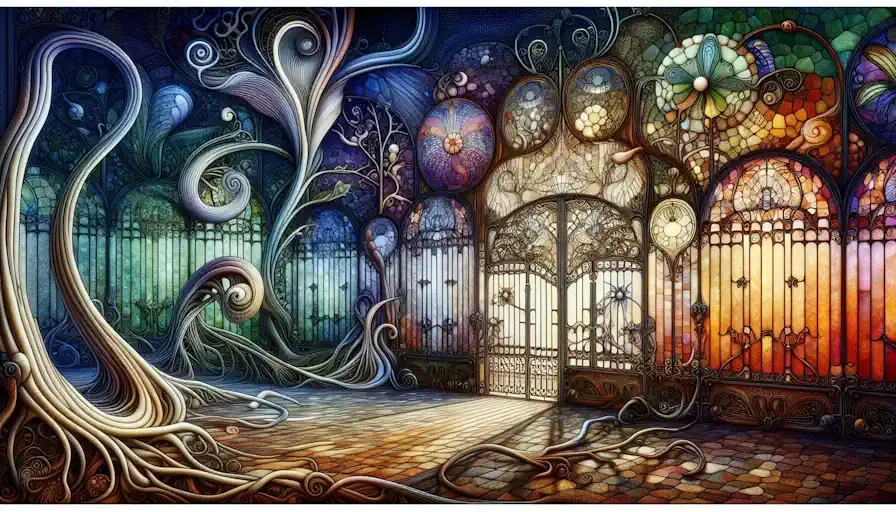




What is Art Nouveau
The Art Nouveau movement emerged in the late 19th century, marking a departure from the traditional academic art styles that had dominated for centuries. It was a response to the Industrial Revolution's mass production and a yearning for a return to nature and craftsmanship. Artists and designers sought to create a new aesthetic that embraced organic forms, flowing lines, and a harmonious integration of art and everyday life. The movement's name, Art Nouveau, meaning "New Art" in French, reflected its innovative and forward-thinking spirit.
This transition from the Arts and Crafts movement to Art Nouveau was a significant shift. While both movements shared an appreciation for handcrafted objects and a rejection of industrialization, Art Nouveau embraced a more stylized and decorative aesthetic. It sought to elevate everyday objects into works of art, adorning everything from furniture and jewelry to architecture and posters with intricate designs inspired by nature.
Nature, particularly the plant world, served as a primary source of inspiration for Art Nouveau artists. The sinuous curves of stems, the unfurling of leaves, and the delicate beauty of flowers were all translated into graceful patterns and motifs. This emphasis on organic forms was a defining characteristic of the movement, setting it apart from the more geometric and structured styles that had preceded it.
In addition to nature, Art Nouveau drew inspiration from Japanese art, which had gained popularity in Europe during the late 19th century. The flat planes of color, asymmetrical compositions, and stylized depictions of nature found in Japanese woodblock prints resonated with Art Nouveau artists, influencing their use of line, pattern, and decorative elements.
The Art Nouveau movement was spearheaded by a group of visionary artists and designers who left an indelible mark on the world of art and design. In Belgium, architect Victor Horta pioneered the use of Art Nouveau in architecture, creating iconic buildings like the Hôtel Tassel. In Spain, Antoni Gaudí's Sagrada Familia became a symbol of Art Nouveau's organic and expressive forms. In France, artists like Alphonse Mucha and Émile Gallé became renowned for their posters, glassware, and jewelry. These figures, along with many others, pushed the boundaries of creativity, establishing Art Nouveau as a major force in the art world.
The movement quickly spread beyond its European origins, taking on unique characteristics in different countries. In the United States, Louis Comfort Tiffany's iridescent glasswork and lamps became synonymous with Art Nouveau elegance. In Austria, the Vienna Secession, led by Gustav Klimt, embraced Art Nouveau's decorative aesthetic and symbolism. In Scotland, Charles Rennie Mackintosh's Glasgow School of Art showcased a distinctive blend of Art Nouveau and Scottish design traditions. This international diffusion of Art Nouveau led to a rich diversity of styles and interpretations, demonstrating the movement's adaptability and universal appeal.
Origins and Evolution of Art Nouveau
The Art Nouveau movement emerged in the late 19th century, marking a departure from the traditional academic art styles that had dominated for centuries. It was a response to the Industrial Revolution's mass production and a yearning for a return to nature and craftsmanship. Artists and designers sought to create a new aesthetic that embraced organic forms, flowing lines, and a harmonious integration of art and everyday life. The movement's name, Art Nouveau, meaning "New Art" in French, reflected its innovative and forward-thinking spirit.
This transition from the Arts and Crafts movement to Art Nouveau was a significant shift. While both movements shared an appreciation for handcrafted objects and a rejection of industrialization, Art Nouveau embraced a more stylized and decorative aesthetic. It sought to elevate everyday objects into works of art, adorning everything from furniture and jewelry to architecture and posters with intricate designs inspired by nature.
Nature, particularly the plant world, served as a primary source of inspiration for Art Nouveau artists. The sinuous curves of stems, the unfurling of leaves, and the delicate beauty of flowers were all translated into graceful patterns and motifs. This emphasis on organic forms was a defining characteristic of the movement, setting it apart from the more geometric and structured styles that had preceded it.
In addition to nature, Art Nouveau drew inspiration from Japanese art, which had gained popularity in Europe during the late 19th century. The flat planes of color, asymmetrical compositions, and stylized depictions of nature found in Japanese woodblock prints resonated with Art Nouveau artists, influencing their use of line, pattern, and decorative elements.
The Art Nouveau movement was spearheaded by a group of visionary artists and designers who left an indelible mark on the world of art and design. In Belgium, architect Victor Horta pioneered the use of Art Nouveau in architecture, creating iconic buildings like the Hôtel Tassel. In Spain, Antoni Gaudí's Sagrada Familia became a symbol of Art Nouveau's organic and expressive forms. In France, artists like Alphonse Mucha and Émile Gallé became renowned for their posters, glassware, and jewelry. These figures, along with many others, pushed the boundaries of creativity, establishing Art Nouveau as a major force in the art world.
The movement quickly spread beyond its European origins, taking on unique characteristics in different countries. In the United States, Louis Comfort Tiffany's iridescent glasswork and lamps became synonymous with Art Nouveau elegance. In Austria, the Vienna Secession, led by Gustav Klimt, embraced Art Nouveau's decorative aesthetic and symbolism. In Scotland, Charles Rennie Mackintosh's Glasgow School of Art showcased a distinctive blend of Art Nouveau and Scottish design traditions. This international diffusion of Art Nouveau led to a rich diversity of styles and interpretations, demonstrating the movement's adaptability and universal appeal.
Architectural Masterpieces of Art Nouveau
The Art Nouveau movement left an enduring legacy in the world of architecture, with several masterpieces showcasing its distinctive style and innovative approach to design. These buildings stand as testaments to the movement's creativity and its ability to transform everyday structures into works of art.
Hôtel Tassel, designed by Victor Horta and completed in 1894, is often considered the first true Art Nouveau building. Located in Brussels, Belgium, it features a harmonious blend of organic forms, flowing lines, and decorative elements inspired by nature. The building's interior is a symphony of curves and light, with intricate ironwork, stained glass windows, and mosaics adorning its walls and ceilings. Horta's attention to detail and his ability to seamlessly integrate art and architecture made Hôtel Tassel a groundbreaking achievement and a symbol of the Art Nouveau movement's emergence.
Antoni Gaudí's Sagrada Familia, an awe-inspiring basilica in Barcelona, Spain, is another iconic example of Art Nouveau architecture. Although still under construction, the Sagrada Familia's unique and expressive forms have captivated visitors for over a century. Gaudí's design was inspired by nature, with towering columns resembling trees, stained glass windows filtering light like leaves, and façades adorned with sculptures of flora and fauna. The Sagrada Familia stands as a testament to Gaudí's boundless imagination and his unwavering commitment to creating a truly organic and spiritual space.
Casa Batlló, also located in Barcelona and designed by Gaudí, is a fantastical dwelling that embodies the spirit of Art Nouveau. The building's façade is a riot of color and texture, with undulating balconies resembling waves, bone-like columns, and a roof reminiscent of a dragon's back. The interior is equally enchanting, with whimsical details like mushroom-shaped fireplaces and stained glass skylights. Casa Batlló is a testament to Gaudí's ability to blur the lines between art and architecture, creating a space that is both functional and fantastical.
Beyond these well-known examples, Art Nouveau architecture flourished in cities across Europe and beyond. In Riga, Latvia, the Alberta iela is lined with ornate Art Nouveau apartment buildings, each boasting its unique blend of decorative motifs and architectural styles. In Nancy, France, the Villa Majorelle showcases a harmonious integration of architecture, interior design, and landscape architecture, creating a total Art Nouveau experience. In Prague, Czech Republic, the Municipal House is a grand example of Art Nouveau's influence on public buildings, with its ornate concert halls, restaurants, and cafes. These and many other architectural treasures offer a glimpse into the diverse and captivating world of Art Nouveau design.
Decorative Arts In The Art Nouveau Style
The Art Nouveau movement extended its tendrils beyond architecture, weaving its way into the realm of decorative arts, transforming everyday objects into exquisite expressions of beauty and craftsmanship. From furniture and glassware to jewelry and ceramics, Art Nouveau artists and designers infused their creations with the movement's signature organic forms, flowing lines, and nature-inspired motifs.
Furniture crafted in the Art Nouveau style was characterized by its graceful curves, sinuous shapes, and rejection of rigid, geometric forms. Chairs, tables, and cabinets were often adorned with intricate carvings depicting flowers, vines, and other natural elements. Woods like mahogany and oak were favored for their rich colors and textures, while upholstery fabrics featured floral patterns and flowing designs. Notable furniture designers of the era include Louis Majorelle, whose elegant pieces showcased the Art Nouveau aesthetic in all its glory, and Émile Gallé, whose innovative use of marquetry and inlaid wood created stunning visual effects.
Glassware experienced a renaissance during the Art Nouveau period, thanks in large part to the innovations of Louis Comfort Tiffany. Tiffany's iridescent Favrile glass, with its shimmering colors and organic shapes, became highly sought after for lamps, vases, and windows. The Tiffany lamp, with its stained-glass shade depicting floral patterns and geometric designs, remains an iconic symbol of Art Nouveau elegance and craftsmanship. Other notable glassmakers of the era include René Lalique, known for his exquisite Art Nouveau jewelry and perfume bottles, and the Daum brothers, whose glass creations often featured floral and animal motifs.
Jewelry designers embraced the Art Nouveau style with enthusiasm, using precious metals and gemstones to create intricate pieces inspired by nature. Floral motifs were particularly popular, with diamonds, pearls, and other gems often arranged to resemble delicate petals, leaves, and stems. René Lalique's dragonfly brooches and peacock pendants became emblematic of Art Nouveau jewelry, while other designers like Georges Fouquet and Philippe Wolfers experimented with innovative techniques and materials, incorporating enamel, horn, and ivory into their creations. Art Nouveau jewelry was not just about adornment; it was a statement of artistic expression and a celebration of nature's beauty.
The Art Nouveau movement also left its mark on ceramics and metalwork, transforming everyday objects like vases, bowls, and teapots into works of art. Ceramic artists like Ernest Chaplet and Taxile Doat experimented with new glazes and techniques, creating unique pieces with vibrant colors and flowing designs. Metalworkers like Hector Guimard, known for his iconic Paris Métro entrances, used wrought iron to create intricate railings, gates, and other architectural details. The Art Nouveau aesthetic was not confined to high-end luxury items; it was also present in everyday objects, elevating the mundane into the extraordinary.
Art Nouveau in Graphic Design and Illustration
The Art Nouveau movement revolutionized graphic design and illustration, leaving an indelible mark on advertising, posters, book illustrations, and other visual media. Artists of the era embraced the movement's signature organic forms, flowing lines, and decorative motifs, transforming commercial art into a form of high art. Their creations not only captured the attention of the public but also elevated the status of graphic design as a legitimate artistic discipline.
Alphonse Mucha, a Czech artist based in Paris, emerged as one of the leading figures of Art Nouveau graphic design. His posters, particularly those for actress Sarah Bernhardt, became iconic representations of the movement's aesthetic. Mucha's posters featured elegant female figures adorned with flowing hair, floral motifs, and intricate patterns. His use of vibrant colors, bold lines, and harmonious compositions captivated viewers and set a new standard for poster design. Mucha's work extended beyond posters, encompassing book illustrations, magazine covers, and even product labels, all infused with his signature Art Nouveau style.
Aubrey Beardsley, a British illustrator known for his provocative and often controversial drawings, also embraced the Art Nouveau aesthetic. His illustrations, often characterized by their black-and-white palette, sinuous lines, and stylized figures, were a departure from the more traditional and realistic styles of the time. Beardsley's work, featured in publications like "The Yellow Book" and "The Savoy," pushed the boundaries of what was considered acceptable in art and illustration, contributing to the avant-garde spirit of the Art Nouveau movement.
Henri de Toulouse-Lautrec, a French painter and printmaker, captured the vibrant nightlife of Paris in his Art Nouveau-inspired posters and illustrations. His depictions of dancers, singers, and other performers at the Moulin Rouge and other Parisian venues were characterized by their bold outlines, flat colors, and dynamic compositions. Toulouse-Lautrec's work not only documented the Parisian entertainment scene but also elevated the poster to a form of high art, influencing generations of graphic designers.
The impact of Art Nouveau on advertising and visual culture was profound. The movement's emphasis on aesthetics, originality, and visual appeal transformed the way products and services were marketed. Posters, once considered mere announcements, became works of art that adorned city walls and captured the imagination of passersby. The use of Art Nouveau motifs and styles in advertising not only enhanced the visual appeal of products but also created a sense of luxury and exclusivity. The movement's influence extended beyond advertising, shaping the visual language of magazines, books, and other printed materials. Art Nouveau's legacy in graphic design continues to be felt today, inspiring contemporary designers and illustrators with its timeless elegance and artistic innovation.
Art Nouveau's Enduring Legacy
Though the Art Nouveau movement flourished for a relatively short period, its impact on art, architecture, and design has been profound and long-lasting. The movement's innovative spirit, embrace of organic forms, and celebration of craftsmanship have continued to inspire and influence artists and designers for over a century. Art Nouveau's legacy can be seen in various artistic and design movements that followed, as well as in contemporary works that pay homage to its timeless elegance and artistic vision.
Art Deco, which emerged in the 1920s and 1930s, was a direct successor to Art Nouveau. While Art Deco embraced a more streamlined and geometric aesthetic, it retained Art Nouveau's emphasis on decorative elements, luxurious materials, and a harmonious integration of art and design. The stylized floral motifs, geometric patterns, and use of exotic materials like ivory and lacquer found in Art Deco design can all be traced back to Art Nouveau's influence.
Modernism, which emerged in the early 20th century, also drew inspiration from Art Nouveau. While Modernism rejected ornamentation and embraced a more functional and minimalist approach, it shared Art Nouveau's interest in experimentation, innovation, and the use of new materials and technologies. The organic forms and flowing lines found in some Modernist furniture and architecture can be seen as a continuation of Art Nouveau's exploration of natural forms.
In contemporary design, Art Nouveau continues to inspire and influence artists and designers across various fields. The movement's emphasis on craftsmanship, sustainability, and the use of natural materials resonates with today's concerns about environmentalism and ethical production. Many contemporary designers are incorporating Art Nouveau motifs and styles into their work, creating a new wave of Art Nouveau-inspired furniture, jewelry, fashion, and graphic design.
Museums around the world house extensive collections of Art Nouveau art and design, showcasing the movement's rich diversity and artistic achievements. The Musée d'Orsay in Paris, the Victoria and Albert Museum in London, and the Museu Nacional d'Art de Catalunya in Barcelona are just a few examples of institutions that offer visitors a glimpse into the enchanting world of Art Nouveau. These collections not only preserve and celebrate the movement's artistic legacy but also serve as a source of inspiration for contemporary artists and designers.
The timeless appeal of nature-inspired design, a hallmark of Art Nouveau, continues to resonate with people today. In a world increasingly dominated by technology and urbanization, the organic forms, flowing lines, and natural motifs of Art Nouveau offer a sense of harmony, balance, and connection to the natural world. The movement's emphasis on craftsmanship and attention to detail also speaks to a desire for authenticity and individuality in an era of mass production. Art Nouveau's enduring legacy reminds us of the power of art and design to inspire, uplift, and connect us to the beauty of the world around us.
Exploring Art Nouveau Destinations
For enthusiasts and admirers of Art Nouveau, embarking on a journey to explore the architectural and artistic treasures of this captivating movement is an enriching experience. Several cities across the globe boast remarkable collections of Art Nouveau buildings, museums, and cultural institutions, offering a glimpse into the movement's diverse interpretations and enduring legacy.
Brussels, the capital of Belgium, is often considered the heart of Art Nouveau architecture. The city's streets are lined with stunning examples of Art Nouveau buildings, from Victor Horta's iconic Hôtel Tassel and Maison Solvay to Paul Hankar's Hôtel Ciamberlani and Gustave Strauven's Maison Saint-Cyr. Visitors can embark on guided tours to explore these architectural gems, marveling at their intricate details, stained glass windows, and harmonious integration of art and design. The Horta Museum, housed in Horta's former home and studio, offers a deeper dive into the architect's life and work, showcasing his furniture, drawings, and other artifacts.
Barcelona, Spain, is another must-visit destination for Art Nouveau enthusiasts. The city is home to several of Antoni Gaudí's most celebrated creations, including the Sagrada Familia, Casa Batlló, and Park Güell. These fantastical buildings, with their organic forms, colorful mosaics, and playful details, transport visitors to a world of imagination and creativity. The Gaudí House Museum, located within Park Güell, offers a glimpse into the architect's life and creative process, while the Museu del Modernisme Català showcases a vast collection of Art Nouveau furniture, decorative arts, and paintings.
Paris, France, may be known for its Haussmannian architecture, but it also harbors hidden Art Nouveau treasures. The city's iconic Métro entrances, designed by Hector Guimard, are instantly recognizable with their sinuous ironwork and floral motifs. The Musée d'Orsay houses a collection of Art Nouveau furniture, decorative arts, and paintings, while the Maxim's restaurant, with its Belle Époque interior, offers a glimpse into the glamorous Art Nouveau lifestyle. Visitors can also explore lesser-known Art Nouveau gems like the Castel Béranger, a stunning apartment building designed by Hector Guimard, and the Lavirotte Building, a colorful example of Art Nouveau architecture on Avenue Rapp.
Beyond these major European cities, Art Nouveau can be found in unexpected corners of the world. In Aveiro, Portugal, colorful Art Nouveau buildings line the canals, reflecting the city's rich maritime heritage. In Nancy, France, the École de Nancy, a group of artists and designers, created a distinctive regional style of Art Nouveau that can be seen in the city's architecture, furniture, and decorative arts. In Riga, Latvia, the Art Nouveau Center offers visitors a comprehensive overview of the movement's impact on the city, showcasing its unique blend of Art Nouveau and national romanticism.
Art Nouveau Resources And Further Exploration
For those captivated by the allure of Art Nouveau, a wealth of resources awaits to deepen your understanding and appreciation of this enchanting movement. Whether you're a seasoned enthusiast or a curious newcomer, these avenues offer a gateway to explore the history, artistry, and enduring legacy of Art Nouveau.
Books and Documentaries
Numerous books and documentaries delve into the intricate details of Art Nouveau, providing in-depth analyses of its origins, key figures, artistic styles, and cultural impact. These resources offer a comprehensive overview of the movement, exploring its various facets and shedding light on its significance in the broader context of art and design history. Some notable books include "Art Nouveau" by Stephen Escritt, "Art Nouveau 1890-1914" by Paul Greenhalgh, and "Alphonse Mucha: The Complete Graphic Works" by Jiri Mucha. Documentaries like "Art Nouveau: The Search for Utopia" and "The Art of the Belle Epoque" offer visual journeys into the world of Art Nouveau, showcasing its architectural marvels, artistic masterpieces, and cultural significance.
Online Resources
The digital age has opened up a treasure trove of online resources dedicated to Art Nouveau. Virtual tours of museums and architectural landmarks allow you to explore Art Nouveau masterpieces from the comfort of your home. Websites like the Art Nouveau European Route offer comprehensive information about Art Nouveau sites across Europe, including maps, itineraries, and historical background. Online image galleries and databases provide access to thousands of Art Nouveau artworks, photographs, and archival materials, allowing you to immerse yourself in the movement's visual splendor.
Art Nouveau Societies and Organizations
Connecting with fellow enthusiasts and experts is a great way to deepen your knowledge and appreciation of Art Nouveau. Numerous societies and organizations dedicated to the movement exist worldwide, offering lectures, workshops, exhibitions, and other events that foster a vibrant community of Art Nouveau enthusiasts. The Réseau Art Nouveau Network, for example, connects Art Nouveau cities across Europe, facilitating cultural exchange and promoting the preservation of Art Nouveau heritage. Joining such organizations can provide valuable opportunities for learning, networking, and contributing to the ongoing appreciation of Art Nouveau.
Art Nouveau-Inspired Activities and Crafts
Bringing the Art Nouveau aesthetic into your own life can be a rewarding and creative endeavor. Many contemporary artists and artisans offer workshops and classes where you can learn techniques for creating Art Nouveau-inspired jewelry, stained glass, ceramics, and other crafts. DIY projects and tutorials abound online, allowing you to experiment with Art Nouveau motifs and styles in your own home. Incorporating Art Nouveau elements into your interior design, fashion choices, or even your garden can add a touch of elegance, whimsy, and natural beauty to your surroundings.
Summary
The Art Nouveau movement, flourishing in the late 19th and early 20th centuries, was a revolutionary response to industrialization, seeking inspiration from nature's organic forms and flowing lines. From its origins in the Arts and Crafts movement to its diverse manifestations across Europe and beyond, Art Nouveau left an enduring mark on art, architecture, and design. Its architectural masterpieces, like the Hôtel Tassel and Sagrada Familia, showcase the movement's innovative spirit and harmonious integration of art and structure. Art Nouveau's influence extended to decorative arts, transforming furniture, glassware, jewelry, and ceramics into exquisite works of art. In graphic design, artists like Alphonse Mucha and Aubrey Beardsley revolutionized advertising and illustration with their captivating posters and drawings. Art Nouveau's legacy continues to inspire contemporary artists and designers, as seen in its influence on Art Deco and Modernism, the revival of its aesthetic in contemporary works, and the preservation of its treasures in museums worldwide. Enthusiasts can explore the movement's rich heritage through books, documentaries, online resources, and by visiting Art Nouveau cities like Brussels, Barcelona, and Paris. The enduring appeal of Art Nouveau lies in its timeless elegance, craftsmanship, and celebration of nature's beauty, offering a welcome respite from the modern world's technological and urban landscapes.